
The short answer most travel sites give you is "May through October" — and they're not wrong, exactly. The weather is reliably good, the trails are lush, and the gorge is doing its full-color thing. But that answer leaves out a lot, and depending on what you're looking for, some of the best times to visit are the ones nobody tells you about.
Here's an honest, season-by-season breakdown from someone who lives here year-round.
Winter (December–March): The Secret Season
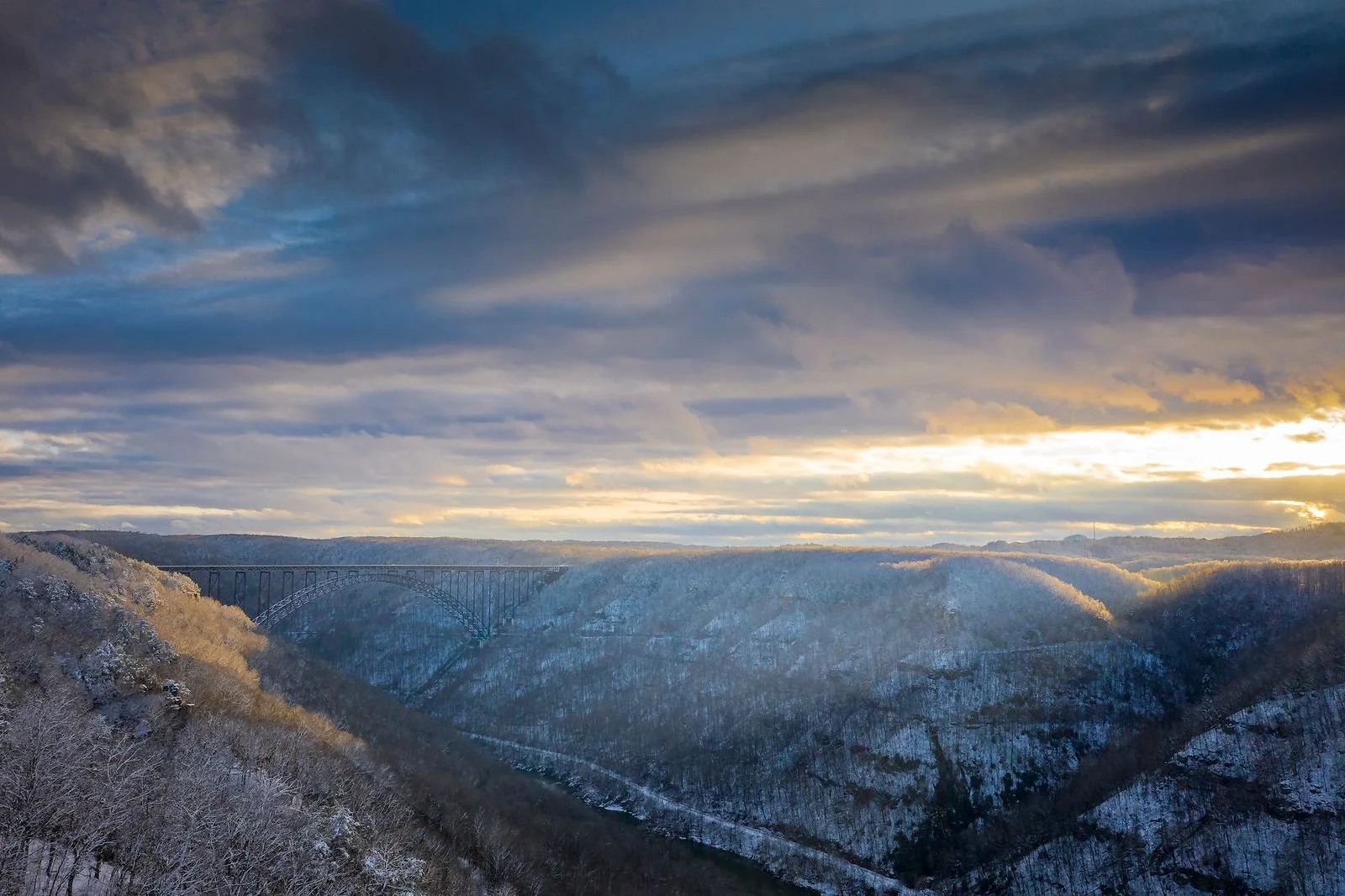
Winter Gorge view. photo credit iron arch media
This is the one locals don't advertise too loudly, so consider this insider information.
Yes, it's cold. Yes, some days are grey. But winter at New River Gorge has something that no other season can offer: the gorge with all its leaves gone.
What that means in practice is that the views open up dramatically. Trails that spend most of the year tunneling through thick forest canopy suddenly reveal panoramic views of the gorge from dozens of unexpected vantage points. Kaymoor, Endless Wall, and Brooklyn Mine Trail in particular are transformed — you can see deep into the gorge and across the expanses in ways that simply aren't possible when everything is in full leaf. If you care about views, winter hiking is genuinely special here.
You'll also have the trails almost entirely to yourself. And if you've been eyeing a stay at one of the area's more unique properties — the kind that are usually hard to snag — January through March is when availability opens up, often with better rates. The gorge doesn't disappear in winter. It just gets quieter.
A note on weather: winter here can mean anything from mild and sunny to icy. Check conditions before you head out on trails, and pack layers regardless.
Spring (April–May): Wildflowers, Waterfalls, and Big Water
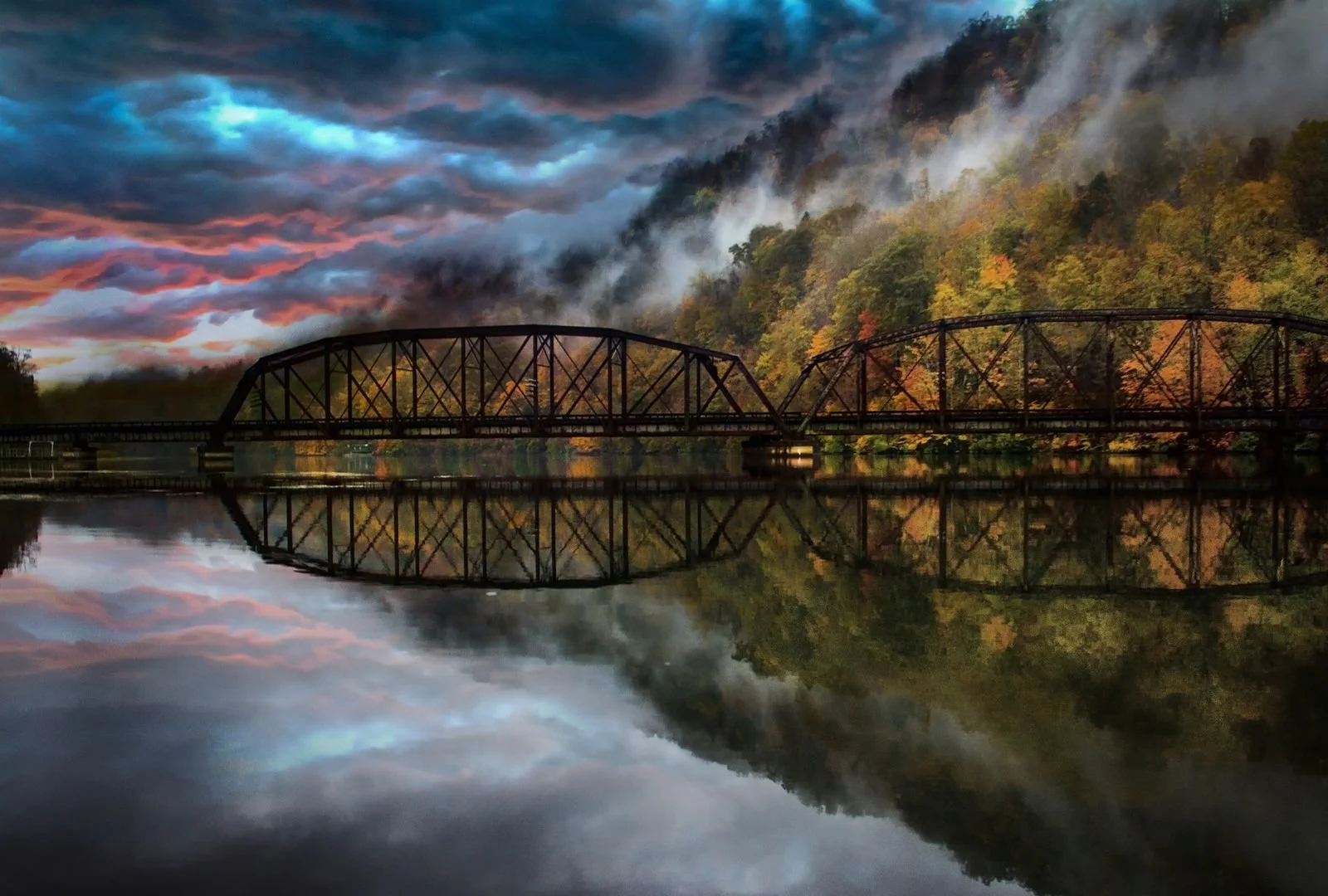
Spring sunset from Hawk’s Nest. photo credit iron arch media
Spring is when the gorge wakes back up, and it does it dramatically. The wildflowers along the trail corridors are genuinely stunning — this is one of the most biodiverse temperate forests in North America, and spring bloom season reflects that.
Spring is also when rain-swollen rivers create some of the best rafting conditions of the year on the New River. If you've been waiting for big, exciting water, a spring trip after a good rain event can deliver it. Check with local outfitters closer to your dates — conditions vary, but the opportunity is there in a way it isn't in drier months.
The main trade-off: spring weather in West Virginia is unpredictable. You might get a glorious warm weekend or a cold, wet one. Flexibility helps.
Summer (June–August): Peak Season for Good Reason
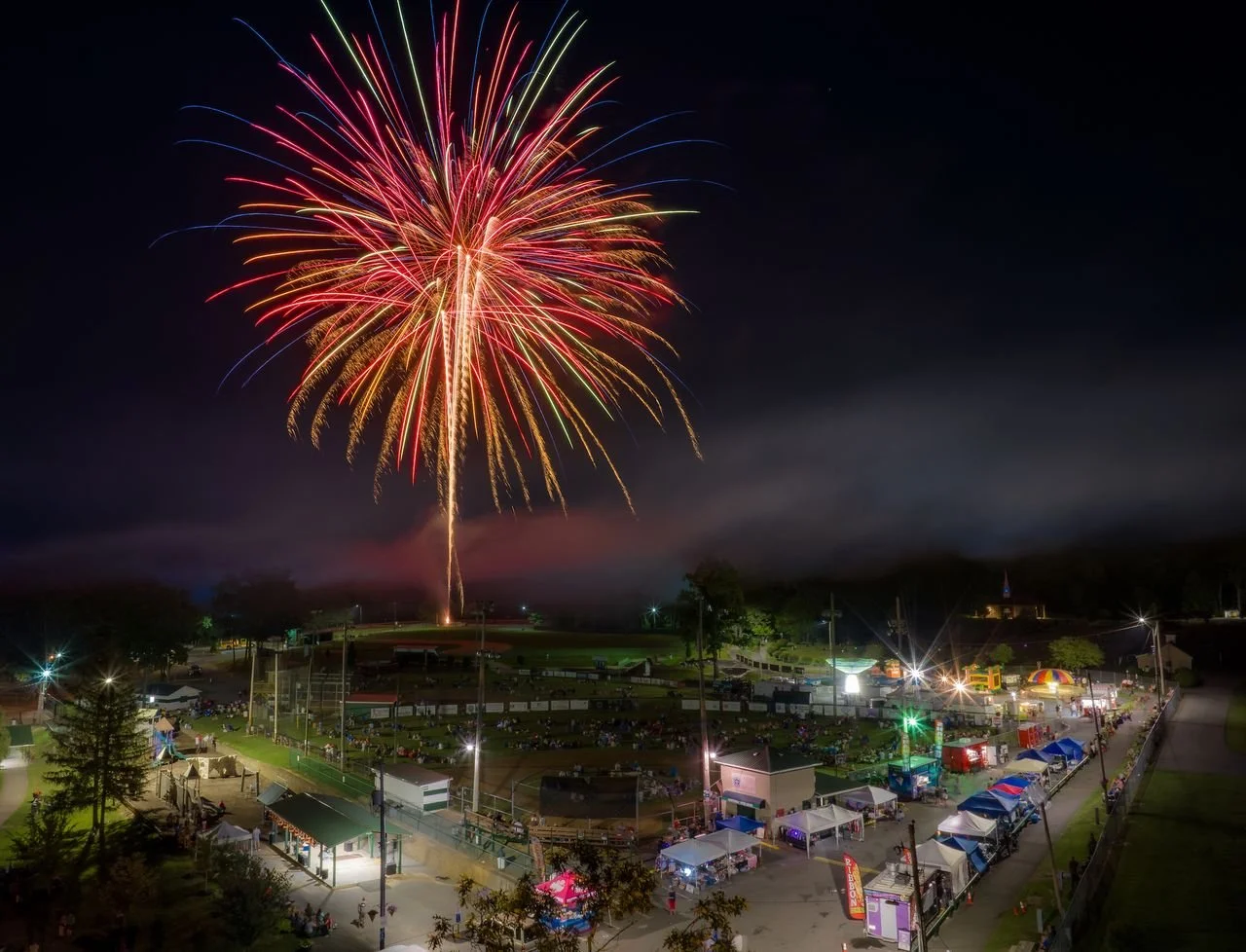
Fourth of July fireworks over Fayetteville City Park. photo credit iron arch media
Summer is busy, and it earns it. The gorge is fully alive — green, warm, buzzing with visitors and activity. Every trail is accessible, the river outfitters are running full schedules, climbing season is in full swing, and Fayetteville's restaurants and shops are operating at full capacity.
If you're coming with a group that has mixed interests or kids who need easy wins, summer gives you the most options. The Bridge Walk is running daily. Rafting on the Lower New is accessible for beginners. The whole infrastructure of the park is operating at its best.
The trade-offs are real though: accommodations book up fast, popular trails see significant crowds, and summer heat and humidity can make strenuous hikes genuinely uncomfortable by midday. Start early if you're hiking.
Fall (September–October): The One That Has It All
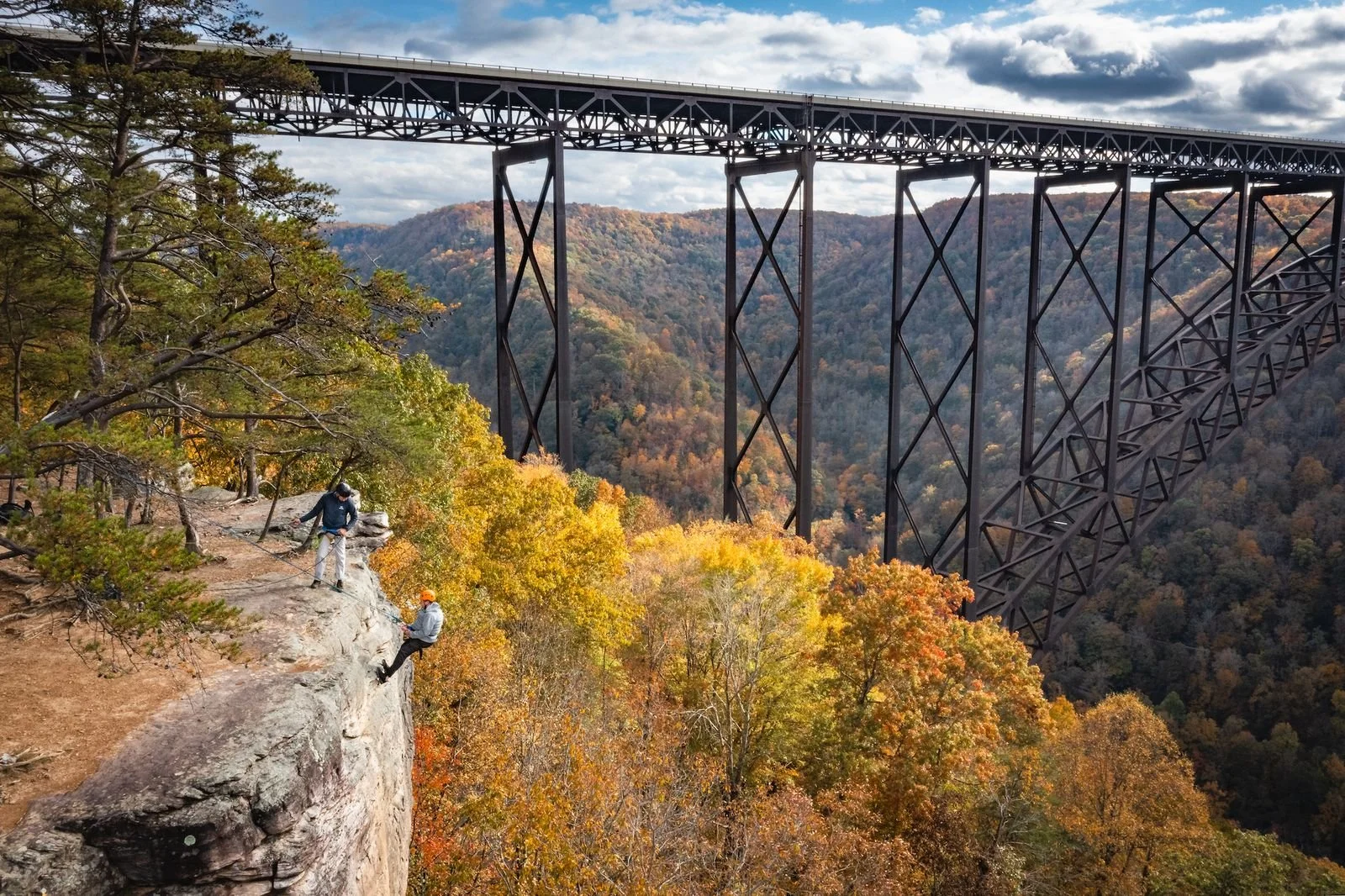
Fall colors and rock climbers in the gorge. photo credit iron arch media
Fall is the season that makes people move to West Virginia. The foliage is as good as anywhere in the Appalachians — reds, oranges, and golds across the entire gorge — and the air is crisp and perfect for hiking.
But the real reason serious outdoor enthusiasts plan their trips around fall is Gauley Season. Starting the Friday after Labor Day and running for seven weekends into October, controlled releases from Summersville Dam turn the Gauley River into one of the top whitewater runs in the world. The Upper Gauley's five Class V rapids draw rafters from across the country who plan their trips a year in advance. It's legitimately world-class, and it only happens once a year.
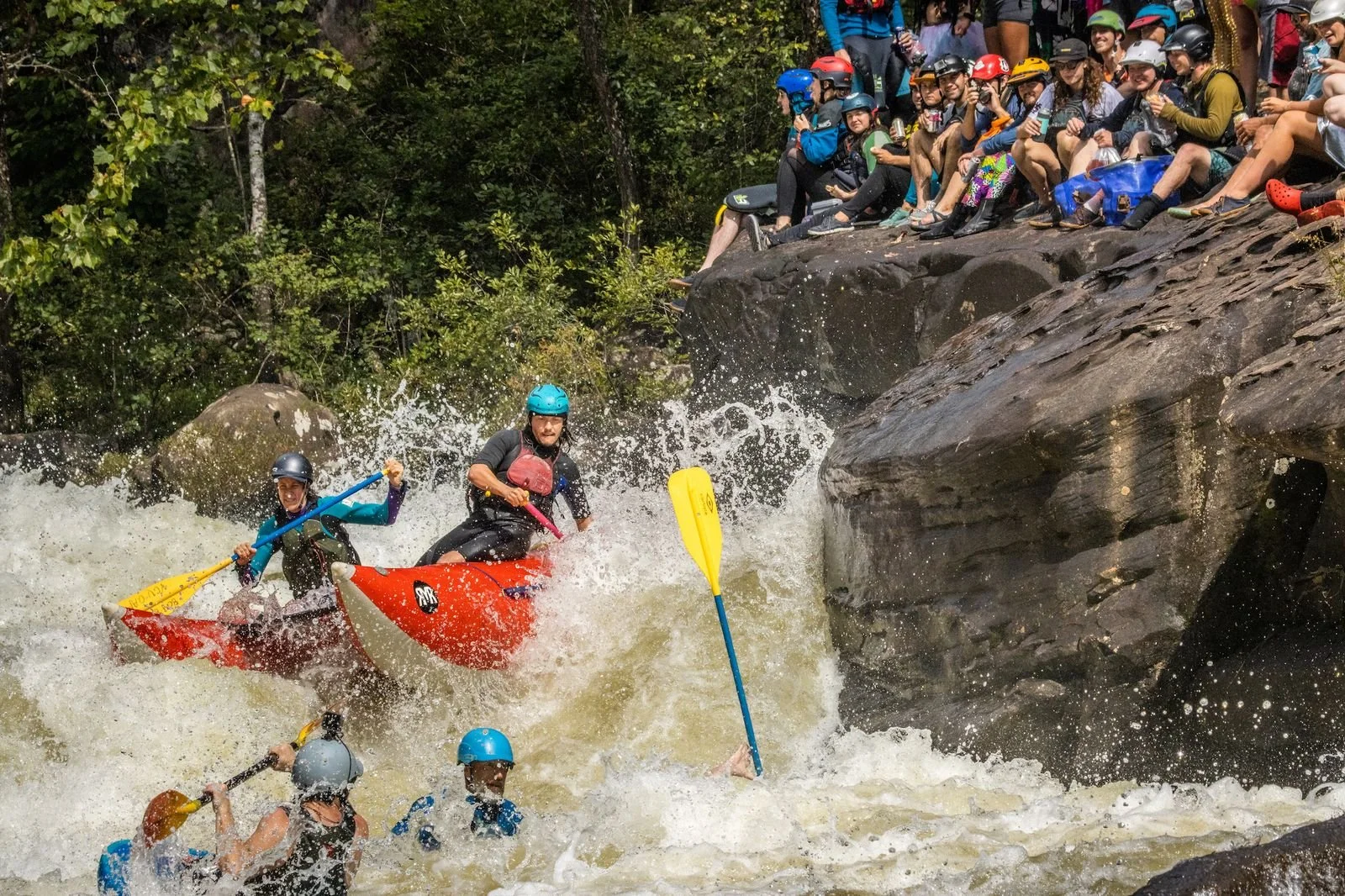
Upper Gauley rafters and crowd watching. photo credit iron arch media
Then there's Bridge Day — the third Saturday in October — the only day of the year when Route 19 closes and pedestrians can walk across the top of the New River Gorge Bridge while BASE jumpers hurl themselves off the edge. It's one of the most genuinely wild things you can watch for free in this country.
Fall is the season to book early. Gauley weekends and Bridge Day weekend fill up fast — months in advance for the most sought-after properties.
The Bottom Line
If you want the full experience with the easiest logistics: late September into October is hard to beat. You get fall color, Gauley Season, Bridge Day, and comfortable hiking temps all in the same window.
If you want the gorge on your own terms, without crowds and with views that most visitors never see: come in winter. Bring layers and low expectations for the weather, and you'll leave with something nobody else has photos of.
There's genuinely no bad time to visit New River Gorge. There's just different versions of it.